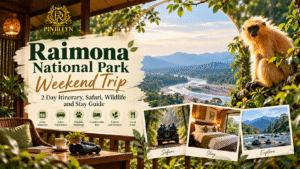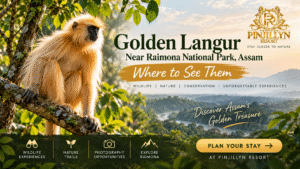

Few wildlife encounters in Assam are as memorable as seeing a golden langur in the wild.
Golden langur near Raimona National Park is one of the most fascinating wildlife experiences travellers can discover in western Assam. With its distinctive golden coat, long tail and quiet movement through the forest canopy, the golden langur is one of the most remarkable primates of western Assam. Scientifically known as Trachypithecus geei, the species is associated with a relatively restricted range in western Assam and neighbouring Bhutan.
For travellers exploring Raimona National Park, golden langurs are one of the wildlife highlights to look out for. The official Bodoland Tourism website specifically identifies Raimona as a destination known for its golden langur population and guided jungle safari experiences.
If you’re planning a wildlife trip and wondering where to see golden langurs in Assam, Raimona and the surrounding western Assam landscape deserve a place on your itinerary.
What Is a Golden Langur?
For visitors interested in golden langur near Raimona National Park, understanding the animal’s habitat is an important part of planning a responsible wildlife experience, If you’re wondering where to see golden langurs in Assam, Raimona National Park is an important wildlife destination to consider, The golden langur (Trachypithecus geei) is an endangered Old World monkey found in western Assam and south-central Bhutan.
Golden langur near Raimona National Park can be easily recognised by its striking golden or cream-coloured coat, which can appear particularly bright when sunlight reaches the animals through the forest canopy.
Golden langurs are primarily associated with forest habitats and spend much of their time moving and feeding in trees. Their restricted distribution and fragmented habitat make conservation particularly important.
The Wildlife Institute of India describes the golden langur as an endangered colobine primate confined to fragmented forest patches in western Assam and south-central Bhutan. Habitat loss and fragmentation are among the major threats to the species.
That makes seeing one in its natural habitat very different from simply seeing a wildlife photograph or visiting a captive setting.
Why Is Raimona National Park Important for Golden Langurs?
Raimona National Park is one of the important wildlife landscapes for golden langurs in western Assam.
The national park covers approximately 422 square kilometres in Kokrajhar district and was notified as a national park in 2021. The Assam Forest Department lists Raimona among the state’s national parks.
Bodoland Tourism specifically highlights the golden langur as one of Raimona’s key wildlife attractions, describing the species as endangered and noting that guided jungle safaris provide opportunities to explore the park’s biodiversity.
The park’s wider forest landscape is also connected to the broader biodiversity of western Assam and the foothills of the Eastern Himalayas.
For visitors, this means Raimona isn’t only about a jeep ride or a checklist of animals. It is an opportunity to experience a forest ecosystem where one of India’s most distinctive primates lives.
If you’re planning a broader wildlife trip, our Raimona National Park Safari and Stay Guide covers the safari and accommodation experience in more detail.
Where Can You See Golden Langurs in Assam?
For travellers searching for golden langur near Raimona National Park, the surrounding western Assam landscape offers an opportunity to explore this unique wildlife habitat.
Important golden langur habitats and landscapes include:
Raimona National Park
Raimona is particularly relevant for travellers staying around Gossaigaon and exploring Bodoland. Official Bodoland Tourism information identifies golden langurs as one of the park’s major wildlife attractions.
Chakrashila Wildlife Sanctuary
Chakrashila Wildlife Sanctuary in western Assam is another important golden langur habitat. The Assam Forest Department describes it as a major habitat for golden langurs and notes that the sanctuary is located in the Kokrajhar region.
Kakoijana Reserved Forest
The Wildlife Institute of India has also documented the significance of Kakoijana Reserved Forest as golden langur habitat.
Together, these areas illustrate why western Assam is so important for golden langur conservation and wildlife tourism.
How to Spot a Golden Langur Near Raimona
A golden langur sighting is never guaranteed. These are wild animals, and their movements depend on habitat, weather, food availability and other natural conditions.
Still, a few simple practices can make your wildlife experience better.
Go with an authorised local guide
A knowledgeable local guide can help visitors understand the forest, identify wildlife and follow the appropriate rules for the area.
Keep your eyes on the canopy
Golden langurs are often associated with forest canopies, so don’t spend your entire safari looking only at the road.
Look between the branches and listen for movement.
Be patient
Wildlife watching is not the same as visiting an attraction with a fixed schedule.
Sometimes you may see an animal immediately. Other times, you may spend hours in the forest without a major sighting.
That uncertainty is part of the experience.
Avoid loud behaviour
Keep conversations quiet and follow your guide’s instructions.
Do not shout, play loud music or attempt to attract animals for photographs.
Never feed wildlife
Feeding wild animals can change their natural behaviour and create risks for both animals and visitors.
Golden Langur Photography Tips
Photographing golden langur near Raimona National Park requires patience because the animals may remain high in the forest canopy. Golden langurs can be difficult to photograph because they may remain high in the trees and move between branches. If your goal is photographing golden langur near Raimona National Park, a telephoto lens and plenty of patience are more useful than trying to get close to the animals.
If you’re carrying a camera, consider:
- Using a telephoto or zoom lens
- Keeping your camera ready before entering likely wildlife areas
- Shooting at a higher shutter speed when animals are moving
- Avoiding flash photography around wildlife
- Taking a wider environmental photograph instead of trying to capture only a close-up
- Staying patient rather than following animals aggressively
You don’t need to get extremely close to create a memorable wildlife photograph.
In fact, keeping a respectful distance is part of responsible wildlife tourism.
What Other Wildlife Can You See in Raimona National Park?
Golden langurs may be one of Raimona’s signature attractions, but they are not the only reason to explore the park.
The official Raimona National Park information highlights wildlife including:
- Asian elephants
- Gaur
- Dhole or Indian wild dog
- Chinese pangolin
- Spotted deer
- Hornbills
- Bengal tiger
- Golden langur
The park also has diverse butterfly and plant life, making it interesting for birdwatchers, photographers and nature enthusiasts beyond traditional safari visitors.
Bodoland Tourism also highlights more than 150 butterfly species and around 170 bird species in its Raimona safari information
When Is the Best Time to See Golden Langurs in Raimona?
The best time for a Raimona trip depends on what you want to experience.
Official Bodoland Tourism information describes September–October and November–February as favourable periods for visiting Raimona and recommends avoiding the heavy monsoon period because of rainfall and humidity.
For wildlife observation, however, there is no month that can guarantee a golden langur sighting.
Conditions in the forest change throughout the year, and animal movement is naturally unpredictable.
If golden langurs are your primary interest, plan your trip around responsible guided wildlife exploration rather than a guaranteed sighting.
Where to Stay for a Golden Langur Trip?
If you’re planning to see golden langur near Raimona National Park and explore the surrounding wildlife areas, staying close to your planned activities can make the trip more comfortable.
Staying close to the park can make a golden langur near Raimona National Park wildlife trip easier, particularly when you want to begin your exploration early. Pinjillyn Resort in Gossaigaon provides a convenient base for travellers exploring Raimona and the surrounding attractions. Staying close to the park can make a golden langur near Raimona National Park wildlife trip more convenient.
After a day of wildlife exploration, guests can return to a comfortable room, enjoy a meal and prepare for the next day’s activities.
For travellers planning an early start, staying in the Gossaigaon area can also reduce the need for a long journey before beginning their day’s exploration.
Planning a Raimona wildlife trip?
Check availability at Pinjillyn Resort →
Plan Your Raimona Wildlife Experience
A trip to Raimona can be much more than a safari.
You can combine wildlife exploration with:
- Golden langur watching
- Birdwatching
- Nature photography
- Forest exploration
- Local cultural experiences
- River and nature activities
- Relaxed evenings at your resort
If you are travelling from outside the region, consider giving yourself enough time to experience the destination instead of treating Raimona as a quick stop.
For more ideas, read our guide:
Things to Do Near Raimona National Park
You can also explore our Raimona National Park Safari and Stay Guide for a broader trip-planning overview.
Responsible Golden Langur Watching
Seeing a golden langur in the wild is a privilege.
The best wildlife experiences are those that leave the animals undisturbed.
When visiting Raimona or any other golden langur habitat:
- Follow forest and guide instructions
- Maintain a respectful distance
- Never feed wildlife
- Don’t attempt to touch or chase animals
- Avoid loud noise
- Don’t use flash if it could disturb wildlife
- Don’t litter
- Stay on authorised routes
- Never try to attract animals for photographs
The golden langur’s restricted and fragmented habitat makes responsible tourism particularly important for its long-term conservation. Research from the Wildlife Institute of India highlights habitat fragmentation as a major conservation concern for the species.
Frequently Asked Questions About Golden Langurs in Raimona
Where can I see golden langurs in Assam?
Golden langurs occur in western Assam and neighbouring Bhutan. In Assam, important landscapes associated with the species include Raimona National Park, Chakrashila Wildlife Sanctuary and Kakoijana Reserved Forest.
Can you see golden langurs in Raimona National Park?
Yes. Golden langurs are one of the key wildlife attractions associated with Raimona National Park, according to Bodoland Tourism. However, wildlife sightings are never guaranteed.
What is the scientific name of the golden langur?
The scientific name of the golden langur is Trachypithecus geei.
Is the golden langur endangered?
Yes. The golden langur is recognised as an endangered primate, with its habitat concentrated in western Assam and south-central Bhutan. Habitat loss and fragmentation are important conservation concerns.
What is Raimona National Park famous for?
Raimona is particularly known for its biodiversity and golden langur population. The park is also home to species including elephants, gaur, dhole, Chinese pangolin and a wide variety of birds and butterflies.
What is the best time to visit Raimona National Park?
Bodoland Tourism identifies September–October and November–February as favourable periods to visit Raimona and advises avoiding the heavy monsoon period.
Where should I stay when visiting Raimona National Park?
Travellers can choose accommodation around Gossaigaon and nearby areas depending on their itinerary. Pinjillyn Resort is one option for visitors looking for accommodation while exploring Raimona and surrounding attractions.
Experience Raimona Differently
The chance to see a golden langur in the forest is one of those experiences that doesn’t need to be rushed.
You may spot a flash of gold between the branches. You may hear movement before you see anything. Or you may simply spend time surrounded by the forest and leave without a sighting.
That’s the nature of wildlife.
And perhaps that’s what makes the experience special.
Plan your Raimona National Park trip, explore the forests of western Assam and make Gossaigaon your base for discovering this remarkable landscape.
Stay at Pinjillyn Resort
Check availability & plan your stay:
https://pinjillynresort.com/